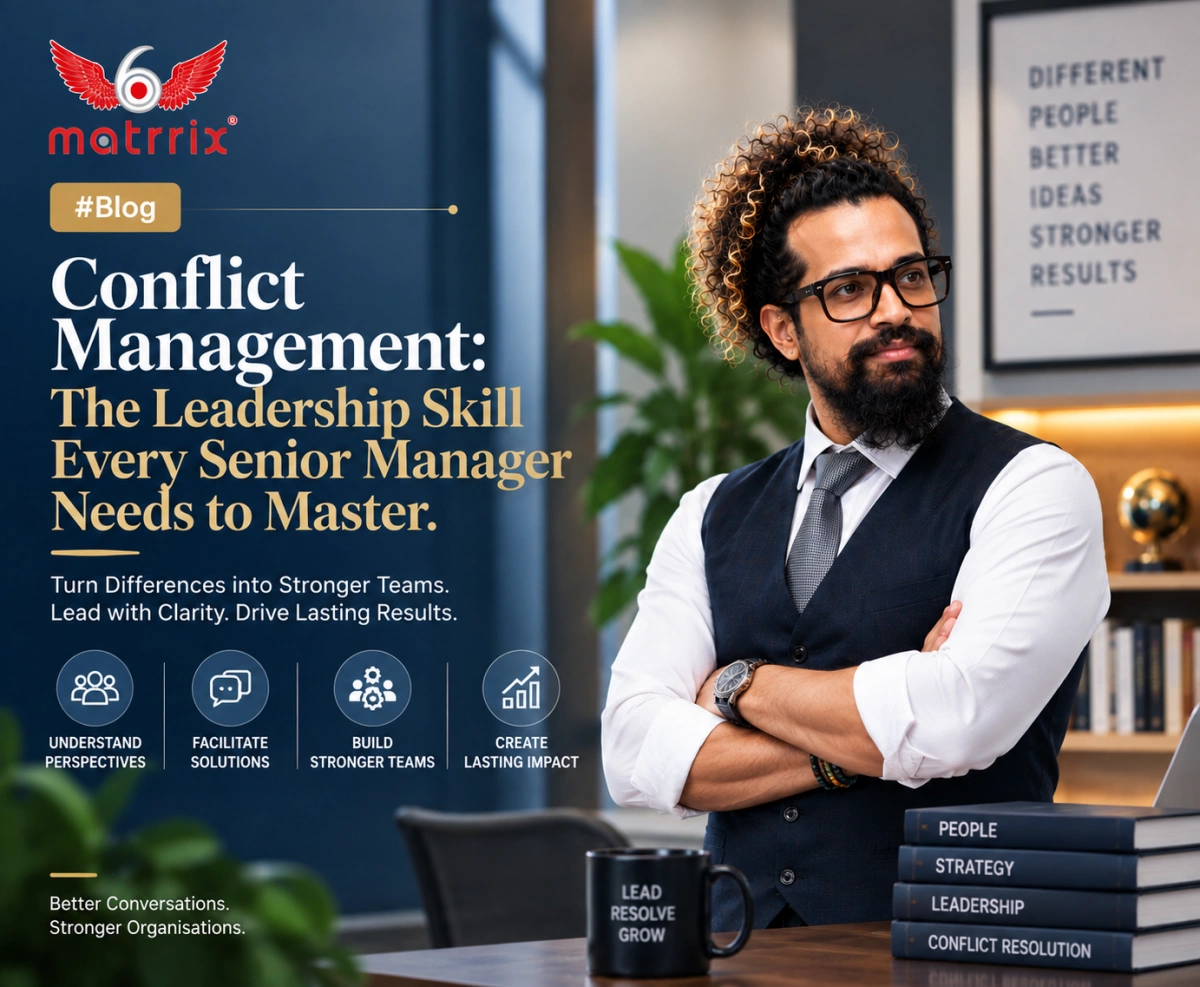
Great Leaders Do Not Avoid Conflict. They Learn How to Navigate It.
After years of leading teams, managing projects, and delivering business outcomes, many senior managers discover an unexpected leadership challenge.
The biggest problems are rarely about strategy.
They are about people.
A disagreement between two high-performing teams.
A stakeholder who refuses to align with a business decision.
A difficult performance conversation.
A leadership team divided over priorities.
These situations are not signs of poor leadership. They are part of leading in complex organisations.
However, the way a leader handles conflict determines whether it becomes a barrier or an opportunity for growth.
As professionals move into senior leadership roles, technical expertise alone is no longer enough. Success depends on the ability to influence people, manage emotions, create alignment, and navigate difficult conversations effectively.
This is why conflict management has become a critical leadership capability for senior managers.
The most respected leaders are not those who eliminate disagreements. They are those who create an environment where different perspectives can be discussed, understood, and transformed into better decisions.
"Conflict is not the enemy of leadership. Unmanaged conflict is. Great leaders create the space where difficult conversations lead to meaningful progress." — Dr. Paras |
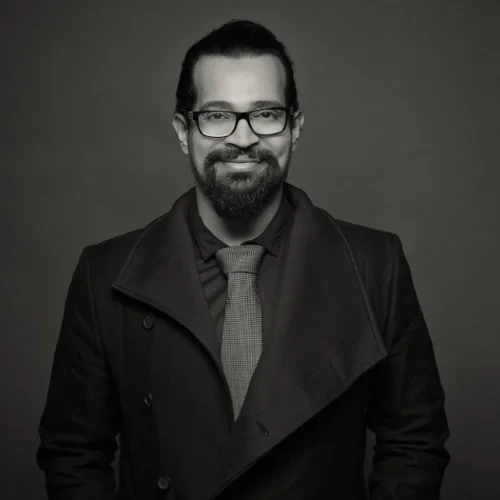
Meet Dr. Paras: Helping Leaders Transform Challenges into Growth Opportunities
At Matrrix, leadership development focuses on helping experienced professionals move beyond traditional management approaches and develop stronger leadership capabilities.
Through executive coaching and leadership development programs, Dr. Paras helps senior professionals strengthen their communication, executive presence, emotional intelligence, and ability to handle complex workplace challenges.
The goal is not simply to resolve conflicts.
It is to build leaders who can create trust, collaboration, and alignment—even in challenging situations.
"A leader's ability to handle conflict reflects their ability to handle responsibility. The higher you rise, the more important your conversations become." — Dr. Paras |
Why Conflict Management Matters More for Senior Leaders
Early in their careers, professionals often succeed because of their individual expertise.
But leadership at a senior level is different.
Your success depends on how effectively you work through people.
Senior managers deal with:
- Multiple stakeholders with competing priorities
- Cross-functional disagreements
- Organisational changes
- Team performance challenges
- High-pressure business decisions
When conflicts are ignored, they rarely disappear.
They become bigger.
- A small disagreement between teams can delay important projects.
- A lack of communication can reduce employee engagement.
- A difficult conversation that is postponed can become a serious leadership issue.
Effective conflict management helps leaders:
- Build stronger relationships
- Encourage healthy discussions
- Improve decision-making
- Create psychological safety
- Strengthen team performance
Conflict management is not about avoiding disagreement.
It is about creating a culture where people feel comfortable saying:
"I see this differently."
"Can we explore another approach?"
"Here is another perspective."
Healthy disagreement often leads to better ideas and stronger decisions.
The Hidden Cost of Poor Conflict Management
Many workplace challenges that appear to be performance problems are actually communication problems.
Poor conflict management can result in:
Reduced Team Engagement
When people feel their concerns are ignored, they become less willing to share ideas or collaborate.
Loss of High Performers
Talented professionals want to work in environments where they feel respected and valued.
Repeated unresolved conflicts can impact employee retention.
Poor Decision-Making
When leaders avoid difficult conversations, important issues remain hidden, affecting business outcomes.
Lower Leadership Credibility
People observe how leaders behave during challenging situations.
The way you handle conflict influences how others perceive your leadership maturity.
"People may forget the decision you made, but they remember how they felt during the conversation." — Dr. Paras |
A Real Executive Scenario: Turning Conflict into Collaboration
Consider a senior delivery manager leading a global technology team.
After 15 years of experience, he was recognised as a strong performer. However, during a major transformation project, two teams started working in silos.
Meetings became tense.
Communication became defensive.
Important decisions were delayed.
Initially, he believed the problem was accountability. He introduced stricter tracking systems and additional reviews.
But the situation did not improve.
During an executive coaching session, he reflected on an important question:
"Am I trying to manage the conflict, or am I understanding what is creating the conflict?"
He changed his approach.
Instead of immediately finding solutions, he listened to both teams, understood their concerns, and identified the real issue.
The problem was not performance.
It was unclear expectations and communication gaps.
By improving alignment and encouraging open conversations, both teams started collaborating effectively.
The lesson was simple:
Great leaders do not only solve visible problems. They understand the deeper issues behind them.
The 4C Framework for Effective Conflict Management
Senior leaders can approach workplace conflicts using this simple framework.
1. Calm: Manage Your Own Response
Before managing a conflict between people, leaders must manage themselves.
Ask:
- What emotions am I experiencing?
- Am I reacting or responding?
- What outcome do I want from this conversation?
A calm leader creates a productive environment for discussion.
"Before you manage conflict between people, learn to manage the conflict within yourself." — Dr. Paras |
2. Clarify: Understand the Real Issue
Many conflicts continue because leaders focus on symptoms instead of causes.
Ask:
- What is the real concern?
- What assumptions are influencing this situation?
- What information are we missing?
Clarity transforms emotional reactions into meaningful conversations.
3. Connect: Build Understanding
One of the biggest mistakes leaders make is rushing towards solutions.
People first need to feel heard.
Instead of saying:
"Let's solve this immediately."
Try:
"Help me understand your perspective first."
Understanding creates trust.
4. Collaborate: Create a Way Forward
The goal of conflict management is not to find a winner.
It is to create progress.
Strong leaders focus on:
- Shared objectives
- Practical solutions
- Clear responsibilities
- Future improvements
Emotional Intelligence: The Foundation of Conflict Management
Conflict management requires emotional intelligence.
Leaders with strong emotional intelligence can:
- Recognise their emotional triggers
- Understand different perspectives
- Communicate with empathy
- Respond instead of reacting
This is why executive coaching focuses heavily on emotional intelligence.
Senior leaders are not only responsible for making decisions.
They are responsible for creating environments where people can perform at their best.
Practical Conflict Management Tips for Senior Managers
Listen Before Leading
Before explaining your viewpoint, understand the other person's perspective.
Ask:
- "Can you help me understand your concern?"
- "What do you think we are missing?"
- "What would a better outcome look like?"
Separate People from Problems
Instead of thinking:
"This person is difficult."
Reframe it:
"There is a challenge here that needs to be understood."
Address Conflicts Early
Avoiding difficult conversations may feel comfortable, but unresolved issues usually become more complex.
Timely conversations demonstrate leadership maturity.
Reflection Questions for Leaders
Take a moment to reflect:
- How do I usually respond when someone challenges my ideas?
- What difficult conversation am I currently avoiding?
- Do my team members feel comfortable disagreeing with me?
- Am I solving the real problem or only addressing the symptoms?
Key Takeaways for Senior Managers
- Conflict is not a leadership failure; unmanaged conflict is.
- Self-awareness is the foundation of effective conflict management.
- Listening builds trust and improves collaboration.
- Difficult conversations create stronger relationships.
- Executive coaching helps leaders navigate complexity with confidence.
Take the Next Step Towards Becoming a More Influential Leader
As a senior professional, you have already built expertise and achieved results.
The next stage of leadership growth is about developing the capabilities that create deeper impact.
Conflict management, emotional intelligence, executive presence, and coaching skills help leaders influence effectively in complex business environments.
At Matrrix, we support experienced professionals through executive coaching and transformational leadership journeys designed to help them become more confident, effective, and influential leaders.
Connect with Matrrix today to explore how executive coaching can support your leadership growth journey.
FAQs: Conflict Management for Leaders
1. Why is conflict management important for senior managers?
Conflict management helps senior managers handle disagreements effectively, improve collaboration, and build stronger relationships with teams and stakeholders.
2. Is conflict always negative in the workplace?
No. Healthy conflict encourages different perspectives, innovation, and better decision-making when managed properly.
3. How can leaders improve conflict management skills?
Leaders can improve by developing emotional intelligence, practising active listening, improving communication, and learning structured conflict resolution approaches.
4. How does executive coaching help leaders manage conflict?
Executive coaching helps leaders understand their behavioural patterns, improve communication, and develop strategies to handle challenging workplace situations.
5. Can conflict management skills be developed?
Yes. Conflict management is a leadership skill that improves through reflection, practice, and coaching.
6. Why is emotional intelligence important in conflict resolution?
Emotional intelligence helps leaders manage emotions, understand different viewpoints, and create more productive conversations.